VI
VI
 Home
HomeMechanical parking tower | How vertical parking systems work?
In many large cities, parking demand is growing faster than the available land. Traditional parking garages require ramps, wide driving lanes, and large circulation areas, which limits the number of vehicles that can be accommodated on a small site. A mechanical parking tower provides a different approach. By using automated lifting systems and vertical storage structures, this technology allows dozens of vehicles to be stored in a compact footprint while minimizing land use. In dense urban environments, these automated vertical parking systems are becoming an important solution for modern parking infrastructure.
What is a mechanical parking tower?
A mechanical parking tower is a fully automated parking system that stores vehicles vertically in a multi-level steel structure. Instead of driving through multiple floors, drivers leave their vehicle at a ground-level entry platform. The automated system then lifts and stores the vehicle in a designated parking slot.

Typical mechanical parking towers include the following core components:
- Steel tower structure with multiple parking levels
- Vertical lifting platform for moving vehicles between floors
- Horizontal transfer mechanism that places vehicles into parking slotsAutomated control system for parking and retrieval operations.
Depending on the design, a single mechanical parking tower can accommodate 20 to 70 vehicles using high-speed lifting mechanisms within a relatively small footprint.
Because drivers do not enter the storage area, the system eliminates ramps and circulation lanes, which significantly increases parking density.
See more: AJ Automatic parking systems – No.1 market share in Korea
How Mechanical Parking Towers Work
The operation of a mechanical parking tower is designed to be simple and fully automated. The entire parking process usually takes only a few minutes.
Vehicle entry and scanning
The driver parks the vehicle on an entry platform at ground level. The system automatically scans the vehicle’s dimensions and weight to ensure it meets the allowed limits.
Typical limits include:
- Vehicle length up to 5300 mm
- Vehicle height up to 2050 mm
- Load capacity around 2350 kg.
Once verification is complete, the driver leaves the vehicle and activates the system using an IC card, keypad, or control screen.
Vertical lifting
A high-speed elevator mechanism lifts the vehicle platform to the assigned parking level. Some systems can operate with lifting speeds of up to 120 meters per minute, significantly reducing waiting time.
The lift operates inside a central shaft and can serve multiple parking levels within the tower.
Horizontal transfer
After reaching the designated level, a mechanical carrier or sliding pallet transfers the vehicle horizontally into the available parking slot.
Advanced designs use comb pallet technology, which reduces the time required to exchange vehicles between platforms.
This combination of lifting and sliding movements allows the system to store vehicles efficiently within a compact structure.
Vehicle retrieval
When the driver returns, the process is reversed:
- The user swipes an IC card or enters a code.
- The automated system retrieves the vehicle from its parking slot.
- The lift transports the platform back to the ground-level exit bay.
In many systems, the average waiting time for vehicle retrieval is around 2 minutes.
See more: Smart parking system type of stacker | How does it work?
Technical characteristics of mechanical parking towers
Modern mechanical parking tower systems are designed with several engineering features that maximize efficiency and safety.
High parking density
A tower system can reach up to 35 parking levels, allowing dozens of vehicles to be stored vertically.
In some configurations, a single tower can accommodate up to 70 cars while occupying only about 50 square meters of land.
This makes mechanical towers ideal for locations where land is limited.
Automated control and smart operation
Most mechanical parking towers use PLC-based automated control systems combined with digital interfaces. Drivers can operate the system through:
- IC card access
- keypad input
- touchscreen interface.

These systems are often integrated with parking management software for monitoring and traffic control.
Advanced safety features
Safety is a critical requirement for automated parking systems. Modern mechanical parking towers typically include:
- anti-collision sensors
- overload detection
- emergency stop systems
- fire protection devices.
These features ensure that vehicles and users remain protected during automated operations.
See more: XIZI automatic parking systems – No. 1 in performance
Circular mechanical parking tower design
One innovative variation is the circular mechanical parking tower. In this configuration, parking spaces are arranged around a central lifting shaft.
Key characteristics include:
- 8 to 12 parking spaces per level
- up to 10 vertical levels
- circular arrangement around the central elevator.
The system combines lifting, sliding, turning, and exchanging mechanisms in the central structure to manage vehicle movement efficiently.
Because of its compact cylindrical design, the circular mechanical parking tower can be integrated into urban landscapes with minimal visual impact.
Advantages of mechanical parking towers
Mechanical parking towers offer several important advantages compared with conventional parking garages.
Maximized land utilization
Vertical parking systems can store significantly more vehicles within the same footprint by eliminating ramps and wide circulation areas.
Improved security
Drivers do not enter the storage area, which greatly reduces the risk of:
- vehicle theft
- vandalism
- accidental collisions.
Reduced environmental impact
Since vehicles are turned off before being stored, automated parking towers can reduce emissions during the parking process by up to 60–80% compared with traditional parking systems.
Faster parking management
Automated retrieval and high-speed lifting mechanisms allow efficient vehicle handling even in high-traffic locations.
See more: Round tower smart parking system provided by Vietchao
Applications of mechanical parking towers
Because of their high capacity and small footprint, mechanical parking tower systems are widely used in projects where space is limited.

Typical applications include:
- high-rise residential buildings
- office towers
- shopping centers
- hospitals and transportation hubs
- public parking facilities in dense urban districts.
These systems are especially suitable for city centers where land costs are high, and parking demand is significant.
See more: A comparison between automatic and semi-automatic parking systems
Conclusion
As urban density continues to increase, efficient parking infrastructure has become essential for modern city planning. The mechanical parking tower offers a practical solution by combining vertical storage, automated lifting technology, and intelligent control systems.
With the ability to store dozens of vehicles within a small footprint, reduce emissions, and improve safety, mechanical parking tower systems are becoming an increasingly important component of smart urban parking solutions.
Contact VietChao via hotline 0898 55 2888 for further information of mechanic parking towers!
Other news
In modern urban environments, understanding of car parking system is essential for optimizing space, improving efficiency, and enhancing user experience. As cities grow denser, traditional parking is no longer sufficient, leading to the development of advanced parking solutions. This guide explores the most common types of car parking system and their key features, benefits, and…
In 2026, the global demand for efficient parking systems has reached an all-time high. As urban areas become more congested, traditional parking solutions are being replaced by automated systems that maximize space and enhance user convenience. Below, we will provide you information about types of parking, parking solutions for buses, and fees along with reliable…

In today’s urban planning, visitor parking is no longer just a secondary amenity; it has become a mandatory standard for evaluating the prestige of a project. Optimizing this area helps resolve traffic congestion and significantly enhances the commercial value of the building. The core and role of visitor parking Visitor parking is a dedicated area…
In the era of digital transformation, managing “static infrastructure”, specifically parking lots, has entered a new chapter. No longer just about “watching over” vehicles, modern parking management is a sophisticated synergy between intelligent software (eParking) and precision mechanical systems. This article provides a comprehensive look at eParking technology and how it is revolutionizing business operations….
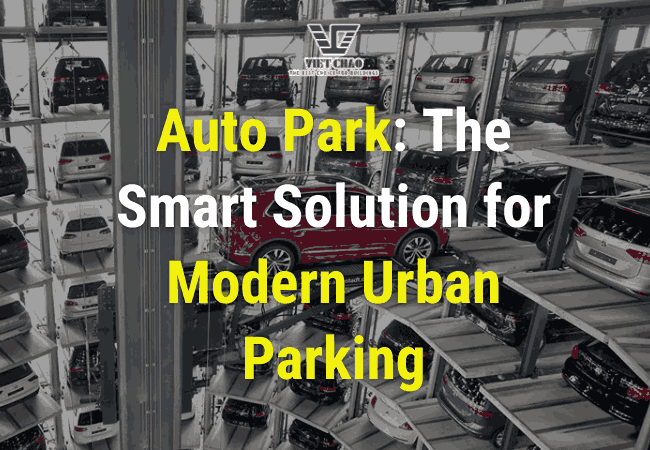
In crowded cities where land is limited and the number of vehicles keeps increasing, traditional parking lots are no longer efficient. Auto Park systems (automated parking systems) are becoming a practical solution that allows buildings to park more vehicles in less space while improving safety and convenience. Modern Auto Park technology uses intelligent mechanical systems…