VI

What is a smart parking block? How it works
When researching smart parking, you may encounter terms such as “block A”, “block B” or “vehicles directed to a suitable block”. What is a smart parking block? How many spaces does it contain, and why does dividing a facility into blocks matter? Understanding the concept helps project owners see how a parking system is arranged, managed and expanded to meet actual needs.
What is a smart parking block?
A smart parking block is an assembly or zone containing multiple parking positions organized and managed together within a facility. Depending on the design, a facility may have several blocks to simplify vehicle allocation, driver guidance and occupancy monitoring.

In puzzle parking systems, a block usually means a structural assembly with several levels, parking positions and pallets that move horizontally and vertically. A vehicle is placed on a pallet, and the control system coordinates movements to store it or return it to the reception level.
Operationally, the block name also serves as a zone identifier. Software may direct sedans to a block suited to their dimensions and SUVs to another. “Block” can therefore mean a physical equipment assembly or a named zone in management software. When reviewing drawings or quotations, ask the provider which meaning is intended.
How does a puzzle parking block work?
Think of a puzzle parking block as a large sliding puzzle. Pallets lift, lower or slide sideways to create a route for a vehicle being stored or retrieved. The design usually reserves vacant positions so pallets have room to move. Hong Kong Transport Department documentation on automated parking systems also describes this lifting and horizontal-sliding principle.
A parking cycle may follow this sequence:
- The driver moves the vehicle into the reception position or onto a pallet at the access level.
- The system checks operating conditions, such as parking-position status and vehicle parameters for the configuration.
- After the driver leaves the reception area, the system moves the pallets to place the vehicle in its parking position.
- For retrieval, the system rearranges pallets and brings the requested vehicle to the handover position.
A block has no fixed capacity. It depends on levels, bays, reserved vacancies, available area and equipment configuration. If a proposal describes a “three-level block”, owners should still ask how many usable parking positions it provides and which vehicle types it accepts.
Why divide a smart parking facility into blocks?
Allocating vehicles to suitable positions
Not every pallet suits every car. Permitted dimensions, height and load must follow each project’s design. Blocks help direct vehicles to appropriate areas and avoid allocating large vehicles to positions intended for smaller cars.
For example, in Viet Chao’s smart parking traffic-flow solution , vehicle information can be linked to an RFID card so software directs it to a preconfigured block, helping reduce localized congestion.
Helping users find the correct area
In a large facility, knowing that vacancies exist is not enough. Drivers also need directions. Clearly identifying blocks on signs and in software guides users to the right area, reduces search time and helps avoid wrong-way travel. For example:
Supporting management and maintenance
Dividing a facility into blocks lets operators track utilization by area: which blocks are full, which have vacancies and which need equipment checks. This organization also makes communication between operators and technicians more specific when incidents occur.
Is a smart parking block the entire facility?
Not necessarily. A block may be only part of a facility. A project can contain one or more blocks depending on its scale and design.
Also distinguish a block from a parking space: a space accommodates one vehicle, while a block is an assembly or zone that may contain many spaces. A pallet is the vehicle-supporting platform in some mechanical parking systems. Understanding these terms helps you interpret drawings and compare quotations accurately.
What should you ask before choosing a smart parking block?
A suitable proposal involves more than fitting in extra vehicles. Project owners should discuss these questions with the consultant:
- What is the actual capacity? Check usable positions rather than simply multiplying levels by bays.
- Which vehicles can the block accept? Establish dimension and load limits for each position, especially where sedans, SUVs and larger cars share a facility.
- What is peak-hour retrieval like? Good capacity still needs entry and exit arrangements suited to demand.
- Does the site meet the design requirements? Area, clear height, access and structural conditions all affect installation.
- How will the system be managed and maintained? Clarify block-status monitoring, procedures when equipment stops and the preventive maintenance plan.
These questions are particularly important when comparing puzzle parking proposals. Two designs with similar level counts may differ considerably in capacity, accepted vehicles and retrieval experience.
A trusted smart parking solutions provider in Vietnam
“What is a smart parking block?” may sound like a terminology question, but the most useful answer is project-specific: how many vehicles, which types, how much space and when users enter and leave.
Viet Chao supplies puzzle parking systems and fully automated parking solutions from XIZI iParking, a leading global parking brand. For a residential or commercial project, send layout drawings, if available, and your requirements through our hotline 0898 55 28 88 for advice on dividing blocks, selecting configurations and organizing suitable operations.
Other news

How many smart parking spaces can a 200 m² automated car park provide? Viet Chao often hears this question from clients seeking advice and planning construction. This example gives project owners a reference for the number of spaces, the system model and the expected cost. How many parking spaces can fit on a 200 m²…
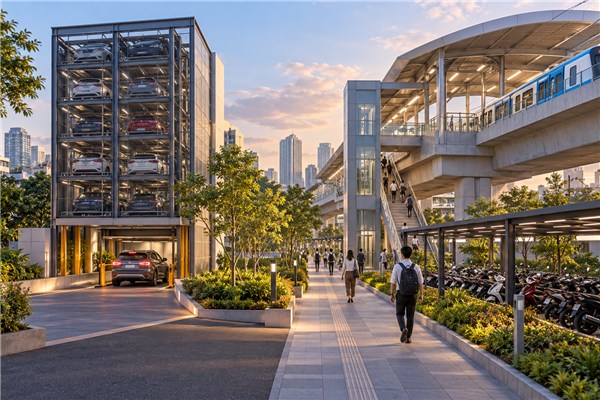
Smart parking near metro stations is gaining attention as public transport networks in major cities expand. Once metro services begin operating, more passengers need to connect private vehicles with public transport. That creates demand for convenient, secure car parks that can be operated efficiently. Around stations, car parks give passengers somewhere to leave their vehicles…

Parking fence height affects how equipment, walkways and protected areas fit together. XIZI iParking recently announced a standard height of 1,100 mm for fixed fencing within the applicable range of its XIZI PSH puzzle parking systems. What does this change mean for the quality of the installation, and why did XIZI choose a new height?…

A sliding pallet parking system can use space in different ways depending on how its pallets move. XIZI offers a double-row PSH configuration that adds front-to-back movement to the horizontal and vertical movement of a standard puzzle parking system. This extra axis brings additional space and equipment requirements. Here is what project owners should consider…

Rooftop parking provides car parking spaces on a building’s roof, making additional space available to meet parking demand. With suitable design and integration with smart parking systems, this area can form part of the building’s traffic and operating plan. Effective implementation, however, requires project owners to address structure, access, parking technology and maintenance together. Explore…