VI


More and more people are choosing the bus as their main means of transportation thanks to its low cost, convenience, reduced congestion, and environmental benefits. This is a positive signal for the country’s road transport development, but it also leaves behind a few urgent issues that need to be addressed. One of these is the problem of parking locations, given that land area in urban zones is becoming increasingly scarce. However, no problem is unsolvable, and the answer to this difficult puzzle is the smart bus parking system. So what exactly is a smart bus parking system? Let’s find out.
1. Concept
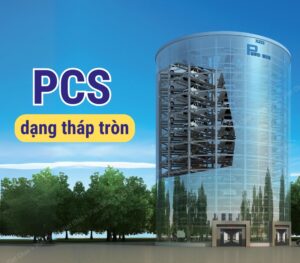
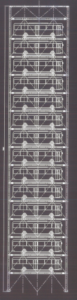
A smart bus parking system is a tower-type parking system developed based on advanced parking technology from Japan. This system is dedicated specifically to buses, can be installed both above and below ground, and offers a flexible number of parking spaces within a small footprint, making it suitable for many types of structures. The smart bus parking system promises to become a new trend for bus parking in the future.
2. Operating Principle
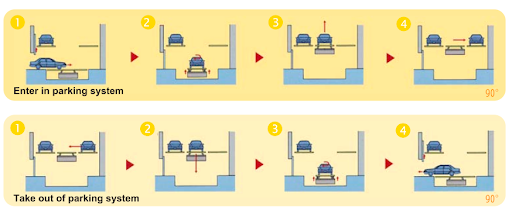
The heart of this smart bus parking system lies in the vertical and horizontal movement of the sliding tray and pallets equipped with high-speed smart sensors. Each level of the system is fitted with sensor devices that operate in a unified manner, allowing the system to determine and find the fastest and most efficient route to the parking spot.
The method for retrieving and parking vehicles is also extremely simple and convenient.
To park a vehicle, the driver only needs to:
- Drive the vehicle to the parking position at the elevator
- Press “Parking vehicle” on the control panel
The sliding tray then moves the pallet vertically up to the parking position, then moves the pallet horizontally and places the vehicle into its parking spot.
Similarly, when the driver wants to retrieve the vehicle, they simply select “Retrieve vehicle” on the control panel and choose their vehicle’s location.
The sliding tray moves up to the driver’s parking level, moves the pallet holding the vehicle onto the platform, then moves the pallet and vehicle down to the entrance position.
All of these operations are fully automated by the system — the driver only needs to operate the control panel. In addition, the parking process can be monitored directly via a screen.
3. Features of the Smart Bus Parking System
The smart bus parking system is equipped with a wide range of advanced, intelligent, and modern technologies aimed at delivering the most effective solution to the public parking problem in urban areas, including:
3.1 Space and Performance Optimization
The system makes maximum use of height, allowing it to hold a large number of buses on a small plot of land — only about 40 m² — optimizing land-use efficiency and thereby maximizing the use of increasingly scarce urban land.
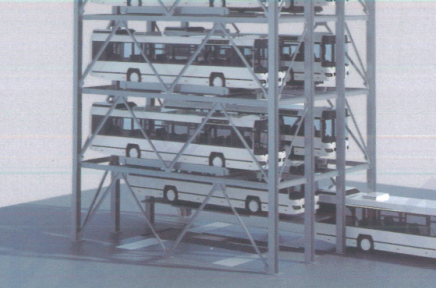
This is an extremely impressive figure compared to traditional bus parking systems. In addition, using a smart bus parking tower streamlines the vehicle pick-up and drop-off process, reduces congestion within the parking area, shortens vehicle retrieval time, and thereby increases the operational efficiency of the bus fleet.

3.2 Flexible Design
To keep pace with the rapid development of major cities, the smart parking system focuses on design flexibility: the system can be installed either above or below ground, suiting a variety of terrain conditions and spatial constraints. In addition, the system can be designed as a standalone structure or integrated into buildings, enhancing both the aesthetics and the value of the construction project.
3.3 Modern and Safe Technology
With the goal of creating the most comfortable and easy parking experience for drivers, the smart bus parking system applies some of the most advanced technologies in the parking industry, including:
- Automatic control: The system is controlled by a PLC (Programmable Logic Controller) and microcontrollers, ensuring stable and precise operation.
- Safety systems: The system is equipped with safety features such as vehicle detection systems and fire alarm systems, ensuring the safety of people and vehicles. It also includes smart sensors that ensure the system only operates when no one is inside, completely limiting the risk of accidents.
- Comprehensive monitoring: The entire parking and retrieval process can be monitored, allowing incidents to be detected and handled promptly.
3.4 Environmentally Friendly
Beyond its functional advancements, environmental concerns are also one of the key factors the system always takes into account:
- Environmental protection: The system is designed to be environmentally friendly, minimizing negative impacts on the surrounding environment. In addition, the smart system can reduce the amount of time buses spend maneuvering to park, significantly cutting down on the buses’ environmental impact — especially since buses are one of the main contributors to urban pollution.
- Energy savings: The system uses variable-frequency drive motors (motors capable of soft starts), helping to save energy and reduce noise.
4. Specifications and Technical Drawings
Technical Drawing
| TECHNICAL DRAWING | Technical Specification | Value | Unit | Notes |
 |
System type | Automated parking tower | PCS (mã sản phẩm cụ thể) | |
| PCS (specific product code) — Parking space dimensions (L x W x H) | 12.8 x 2.55 x 3.6 | m | Typical dimensions of one parking space | |
| Height per level | 4.35 | m | Distance from the floor of one level to the floor of the next | |
| Load capacity per level | 15 | tấn | Maximum weight each level can support | |
 |
Base drawing
|
|||
See more: Puzzle parking system – Smart automatead parking solution
5. Notes for Installing the Smart Bus Parking System
Installation: To achieve the highest efficiency, the smart bus parking system typically requires choosing high-quality suppliers and fabrication, which can make the initial investment cost higher than other smart parking systems. Please contact Viet Chao for accurate and suitable pricing information.
Warranty and maintenance: Due to the simplicity and flexibility of the installation process, warranty and maintenance costs for the smart bus parking system at facilities such as Viet Chao’s installation and maintenance centers remain relatively low.
6. Who Should Invest in a Smart Bus Parking System?
The smart parking system is well suited for investors in public bus systems who are looking for a smart and efficient parking solution — for example, investors in state-owned parking lots such as Giap Bat or My Dinh bus stations. Given the ongoing challenges related to bus parking, such as the persistent problem of other vehicles competing with buses for parking spaces, investing in a smart bus parking system promises to bring many positive results for investors. The system’s design is especially well suited to creating an efficient and intelligent parking environment for large numbers of high-load public vehicles.

7. The Future of Smart Bus Parking Systems
The shortage of parking areas is, unfortunately, not an uncommon story in Vietnam, especially in major cities. Population growth, along with the increasingly high demand for improved quality of life — including the demand for public transportation such as buses — has made this issue more pressing. However, this also raises the question of parking space for these vehicles, and fortunately, the tower-type smart parking system is the perfect answer to this problem. With a reasonable budget and the ability to meet large-scale parking demand amid increasingly scarce land in major cities, the tower-type smart parking system promises to become an increasingly popular investment trend.
If you have any needs or questions and would like consultation, call Vietchao hotline now: 0898 55 28 88 for free advice!