VI

Investing in parking facilities | 7 mistakes to avoid
The paid parking market is growing rapidly in major urban areas. Rising demand, increasing private vehicle ownership, and limited land availability are making smart parking systems an increasingly necessary solution. However, investing in parking facilities also comes with risks if the project is not properly planned from the beginning.
Long-term investment is not simply about installing a smart parking system—whether puzzle, stacker, or fully automated—and integrating cameras, automatic barriers, and management software to create a modern parking facility. In reality, many mistakes occur right from the beginning, particularly in the investment mindset.
1. Investing in parking facilities: Viewing parking as a revenue-generating system
A parking facility is not merely transportation infrastructure. It is an asset capable of generating recurring daily revenue. Without carefully assessing the financial model before implementation, the entire system can become a burden rather than a source of profit.
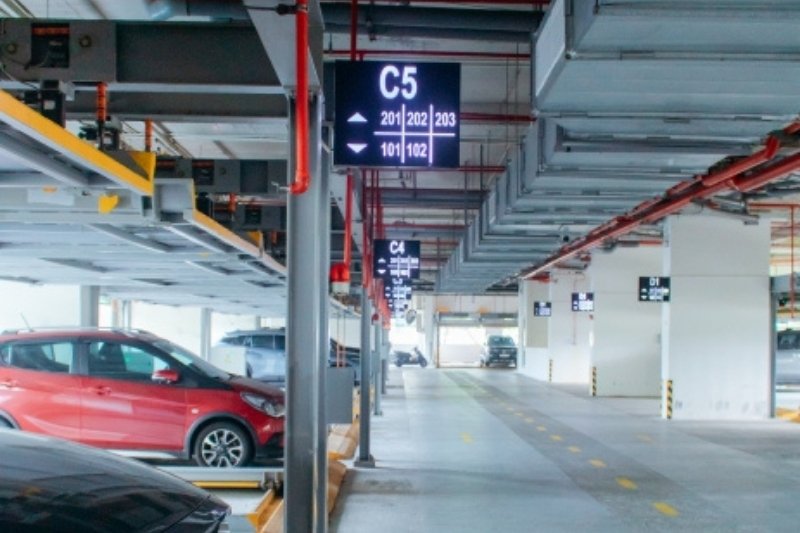
Before investing, it is essential to analyze cash flow based on actual operating capacity:
Revenue = Occupancy Rate × Average Fee × Number of Slots × Operating Time
Many projects estimate vehicle demand based on assumptions rather than surveying occupancy rates by time of day and day of the week. Some paid parking facilities can reach 95% occupancy on weekends but only 40% on weekdays. If a fixed fee is applied, the project owner may be missing out on a significant amount of potential revenue. This mistake can cause the payback period to take twice as long as planned.
Buying equipment instead of building an ecosystem
A truly smart parking system should function as an integrated ecosystem. In practice, however, many projects are implemented in a fragmented way: cameras from one provider, software from another, and barriers from a third. As a result, the system may lack synchronization, open APIs, ERP integration, and scalability.
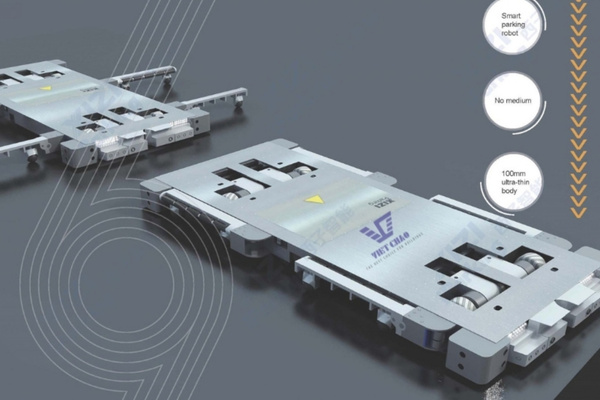
The issue is not simply which technology is used, but whether the system architecture is scalable enough. When the system grows from a few hundred to several thousand parking spaces, can the internal server handle the increased load? Is there a backup system in place in case of a failure?
If scalability is not considered from the beginning, future upgrade costs can be higher than the initial investment itself.
Analyzing vehicle traffic flow before investing in parking facilities
A paid parking facility not only needs to process payments accurately but also handle vehicles efficiently, while measuring the most important metric: the number of vehicles processed per hour.
Throughput = Number of vehicles / Hour
If each vehicle takes 20–50 seconds to enter or exit, long queues can form during peak hours. Congestion not only frustrates customers but can also cause some drivers to turn away, resulting in direct revenue loss.
An optimized smart parking system can reduce processing time to a minimum (<10 seconds) through automatic license plate recognition and cashless payment. A difference of just a few seconds can translate into thousands of additional vehicle transactions per day.
In central Hanoi, the Hanoi Centre project experiences high vehicle traffic, particularly on weekends and during evening peak hours. If each vehicle takes 15–20 seconds to process under a traditional model, processing just 200–300 vehicles per hour can already begin to cause localized congestion at the entrance.
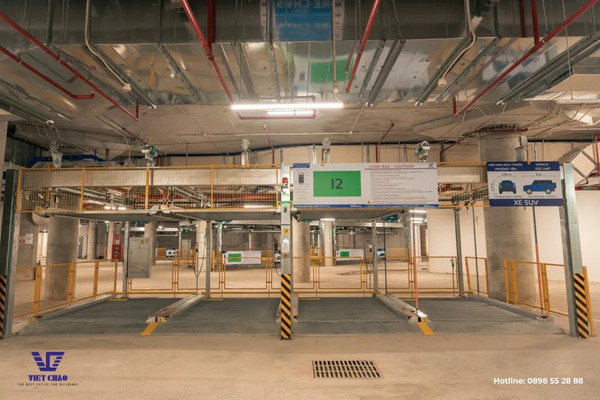
TID Group integrated the smart parking system supplied and installed by Viet Chao, featuring automatic license plate recognition, multi-point parking fee payment based on real-time data, and technology for managing and monitoring the parking system status. The processing time per vehicle is reduced to approximately 3–10 seconds, significantly increasing gate throughput and eliminating prolonged queues.
Mistakes in parking revenue loss control
One of the reasons many investors switch to smart parking systems is to reduce fraud. However, if the system is not properly designed from the outset, revenue leakage can still occur. Paper tickets, manual operations, failure to record entry and exit images, and the lack of automatic data reconciliation all create gaps in control. A 5–10% loss of monthly revenue may not be obvious in the short term, but over a year, it can amount to a significant loss.
A properly designed system should automatically record each parking session, capture license plate images, accurately store entry and exit images, and synchronize data in real time. This significantly reduces reliance on manual reconciliation.
Underestimating customer experience in paid parking facilities
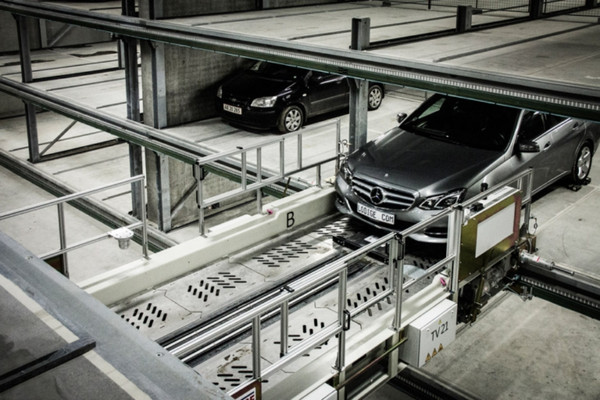
Modern customers are accustomed to QR payments, e-wallets, and NFC. If a parking facility still requires customers to find cash or wait for staff to process transactions, the experience will feel outdated.
A waiting time of just a few extra seconds can negatively affect perceptions of the entire building, shopping mall, or residential complex. A smart parking system should operate almost entirely as a self-service solution, requiring minimal manual interaction from users.
A good user experience not only helps retain customers but also increases the likelihood of repeat visits.
Underestimating the total cost of investing in parking facilities
Many investors focus only on the initial equipment cost and overlook the fact that the actual total cost also includes operation and maintenance:
TotalCost = Capex + Opex + Maintenance
If software upgrade costs, equipment maintenance, system downtime, or component replacement after several years are not included, the financial analysis can be significantly distorted. A low-cost, non-genuine smart parking system that operates unreliably may result in repair and operational disruption costs far exceeding the initial estimate.
See more : Automatic parking system lifespan | When to upgrade?
Not measuring performance using data
The most dangerous mistake is completing the project without tracking KPIs. Occupancy rate, revenue per parking space, average parking duration, peak hours, and other key metrics should all be displayed on a real-time dashboard.
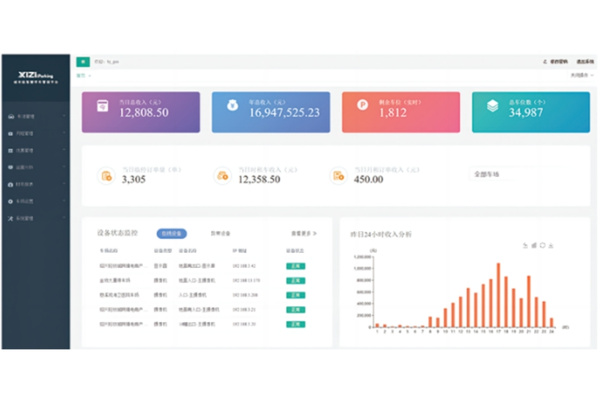
Without measurement, project owners cannot optimize performance. Without optimization, the parking facility remains merely a paid parking service, rather than a smart business model.
See more: Smart parking construction cost 2026 | A-Z Pricing
Conclusion
The 7 mistakes when investing in a smart parking system are not about overly complex technology, but about oversimplifying the investment approach. A modern paid parking facility should be designed as a sustainable revenue-generating system, optimized through data and operated with integrated technology.
When properly implemented, a smart parking system can increase utilization capacity, minimize revenue leakage, reduce vehicle processing times, and improve customer experience. Conversely, making the wrong investment decisions from the outset can cause repair and upgrade costs to far exceed the initial budget.
When choosing Viet Chao, investors are not simply investing in a smart parking system but gaining a solution designed based on traffic flow analysis, revenue modeling, and practical revenue leakage control. For projects involving parking system expansion, renovation, or design, we provide flexible and transparent solutions tailored to each project’s requirements.
If you are interested, contact us via hotline 0898 55 28 88 for free 24/7 consultation on your project.
See more : (ROBOT) What Is an AGV (Automated Guided Vehicle)?
Other news

What should project owners prepare before selecting a parking solution for their building? The smart parking system site survey checklist below helps you review 8 essential categories of information. Viet Chao will explain how these data can be used to discuss the appropriate solution and minimize potential issues during implementation. What does a smart parking…
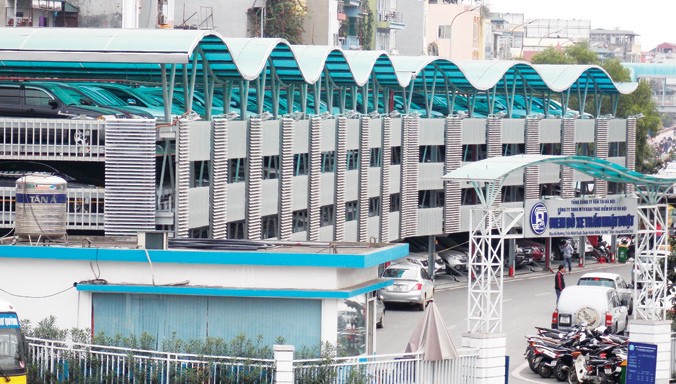
As urbanization continues to accelerate, population density, commercial activity, and other urban operations are also increasing significantly. Car ownership has become increasingly common among households, putting greater pressure on traffic infrastructure and available parking spaces. A practical solution to this growing demand is the development of smart parking systems, which can optimize existing land while…
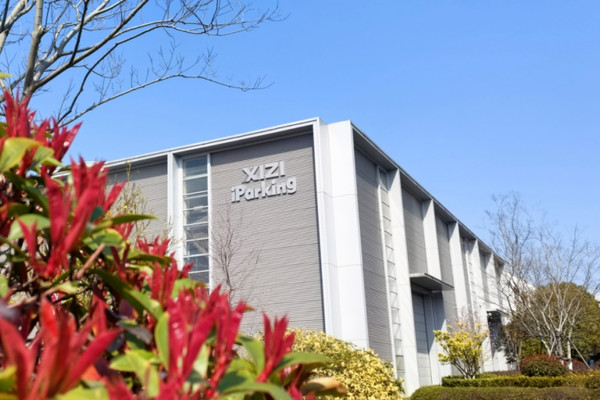
An XIZI smart parking solution is more than a mechanical system for moving vehicles in and out of parking spaces. It combines advanced technology, durable equipment, space optimization, operational safety, investment efficiency, and professional implementation to meet the specific requirements of each parking project. With XIZI’s position in the Chinese and international markets, along with…

A smart parking facility is increasingly being adopted by residential complexes, shopping malls, and office buildings to manage a growing number of vehicles when parking space cannot be expanded. However, when motorcycles and cars share the same parking area, efficient traffic flow management becomes a key factor in determining the overall operating efficiency. In practice,…
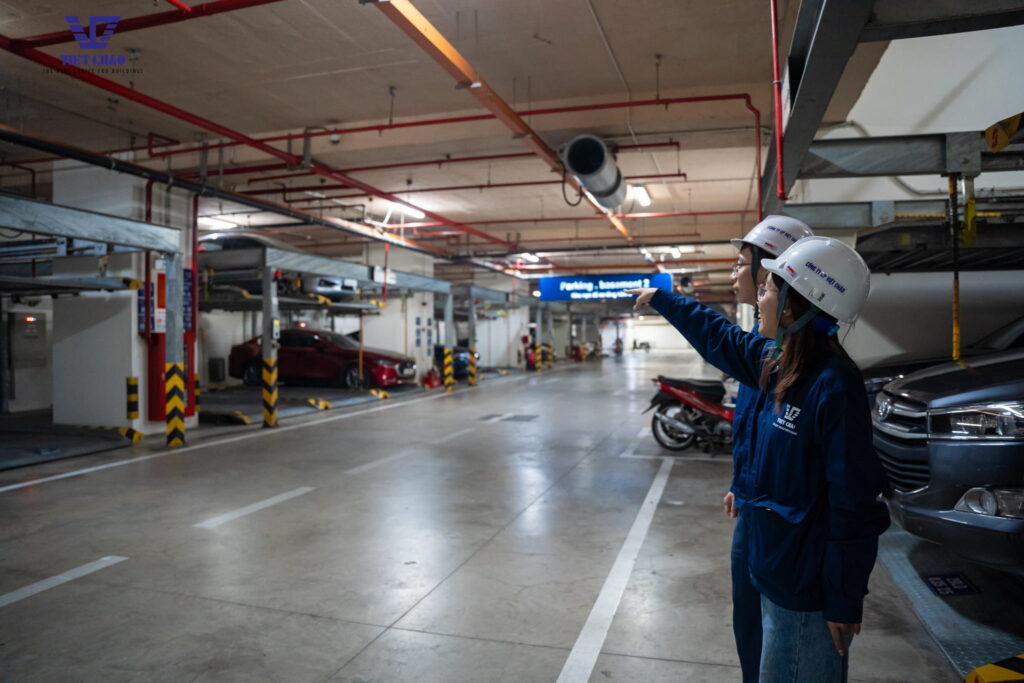
When investing in an automatic parking system, the initial cost is always a key consideration. However, what many investors really want to know is: how many years can the system operate reliably, and when should it be upgraded? These factors determine the long-term return on investment and operating costs. What is the average lifespan of…